

 Cosmetic and Plastic Surgery
 Medico-Aesthetic Services
 Skin Laser Solutions
 Skin Solutions
 Slimming Solutions




Topical vs. Injectable Peptides: What’s the Difference? Dr. Muhammad Al-Azzeh Explains

Topical vs. Injectable Peptides: What’s the Difference? Dr. Muhammad Al-Azzeh Explains
If skincare could do everything, injectables wouldn’t exist.
That was one of the key points that came up when we spoke with Dr. Muhammad Al-Azzeh at Silkor about peptides and the growing interest in peptide-based skin treatments.
Peptides are now found in everything from serums and creams to professional injectable treatments. But does that mean they all work in the same way?
According to Dr. Muhammad, the answer is no.
Topical peptides and injectable peptides are two different tools, with different purposes and different ways of working. Understanding that difference can help you make better choices when it comes to your skincare and aesthetic treatments.
What Are Peptides?
Before comparing topical and injectable peptides, it helps to understand what peptides actually are.
Peptides are short chains of amino acids that can play a role in different processes in the skin. They are commonly used in skincare products because of their potential to support the appearance and overall quality of the skin.
You may have already seen peptides listed as an ingredient in anti-aging serums, moisturizers, and other skincare products.
But peptides are not limited to topical skincare.
They can also be used in injectable treatments, where the approach is very different.
What Are Topical Peptides?
Topical peptides are ingredients applied directly to the skin through products such as creams, serums, and other skincare formulas.
They can be a useful part of a regular skincare routine and may help support the skin’s appearance over time.
This is one reason peptide serums have become popular in anti-aging skincare.
However, topical skincare has its own limitations. When you apply a product to the surface of your skin, it has to work through the skin’s natural barrier.
This does not mean topical peptides are ineffective. It simply means they have a different role from injectable treatments.
As Dr. Muhammad explained, different tools have different jobs.
What Are Injectable Peptides?
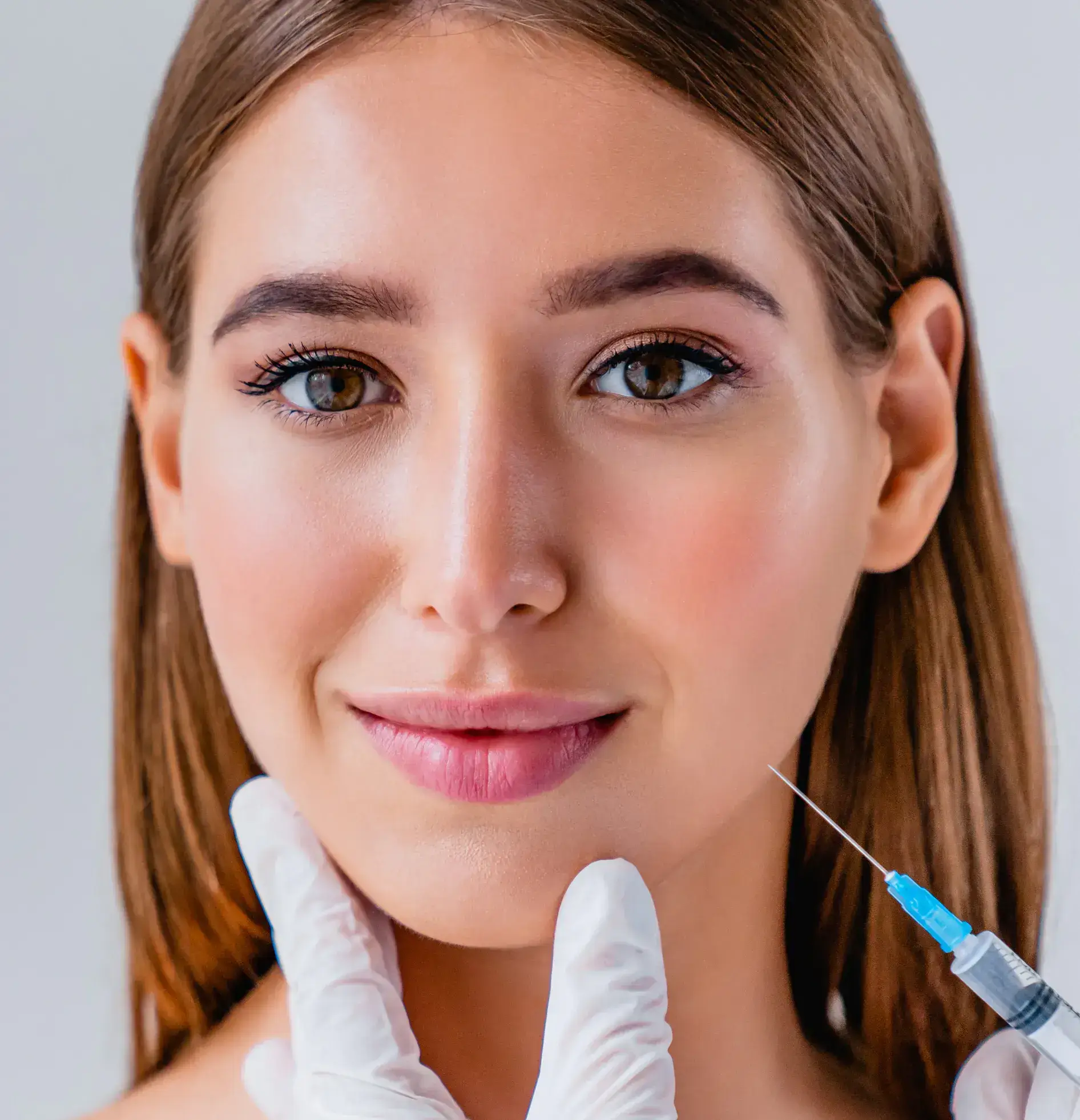
Injectable peptides are delivered through an aesthetic treatment rather than applied to the surface of the skin.
Because the treatment is administered directly into targeted areas, injectable peptides work differently from topical peptide skincare.
Depending on the specific injectable treatment being used, the goal may be to support skin quality, hydration, elasticity, or other aspects of skin health and appearance.
This is why injectable peptides should not simply be thought of as a stronger version of a peptide serum.
They are a different type of treatment altogether.
Topical Peptides vs. Injectable Peptides: What’s the Difference?
The easiest way to understand the difference is to think about the tools themselves.
Topical peptides are part of your daily skincare routine. You apply them to the skin and use them consistently as part of your overall skincare regimen.
Injectable peptides, on the other hand, are professional aesthetic treatments administered by a qualified medical professional.
They are designed to work through a different delivery method and can provide results that skincare products alone may not be able to achieve.
This does not mean you need to choose one over the other.
In fact, your skincare routine and professional aesthetic treatments can have completely different roles.
Can Skincare Replace Injectable Treatments?
This is where things can get confusing.
A good skincare routine is important. Cleansing, moisturizing, using antioxidants, applying sunscreen, and choosing targeted ingredients can all help you take care of your skin.
But skincare products and injectable treatments are not interchangeable.
As Dr. Muhammad pointed out, if skincare could do everything, there would be no need for injectables.
The goal is not to decide which one is “better.” The real question is: What does your skin need?
For some concerns, a topical skincare routine may be enough. For others, a professional treatment may provide a more suitable approach.
Why Does Choosing the Right Treatment Matter?
The beauty industry is constantly introducing new products and treatments, which can make it difficult to know what you actually need.
A peptide serum may be perfect for adding to your daily skincare routine. That does not automatically mean an injectable peptide treatment is necessary.
On the other hand, if you are looking for more than what topical skincare can provide, a consultation with an aesthetic doctor can help you understand your options.
At Silkor, our doctors take the time to assess your skin and understand your concerns before recommending a treatment.
This personalized approach matters because there is no single anti-aging treatment that works for everyone.
Should You Use Peptide Skincare and Injectable Peptides Together?
They can have different roles in your overall approach to skin health.
Think of your skincare routine as the everyday foundation, while professional aesthetic treatments can address specific concerns in a more targeted way.
The important thing is not to use every product or treatment simply because it is trending.
Instead, understand what each treatment is designed to do and whether it is appropriate for your skin.
As Dr. Muhammad Al-Azzeh explained, different tools have different jobs.
And when it comes to achieving healthier-looking, more youthful skin, knowing which tool you actually need can make all the difference.
If you are considering injectable peptides or want to understand whether an injectable treatment is right for your skin, a consultation with a qualified doctor at Silkor is the best place to start.