
 Cosmetic and Plastic Surgery
 Medico-Aesthetic Services
 Skin Laser Solutions
 Skin Solutions
 Slimming Solutions



Is Beauty Really in the Eye of the Beholder?
The Science, Psychology, and Social Conditioning Behind Attraction
Is Beauty Really in the Eye of the Beholder?
We’ve all heard it.
Probably said it.
“Beauty is in the eye of the beholder.”
It sounds poetic. Comforting. Almost freeing.
But is it actually true?
Or is beauty something we were quietly taught to see, like a software update we never agreed to install?
Let’s talk about it honestly, casually, and without pretending we’re immune to the world we live in.
The Uncomfortable Truth: Beauty Standards Are Learned
Here’s the part most people don’t love hearing:
Beauty standards are not born. They’re built.
Injected. Repeated. Normalized.
And eventually? Internalized.
From a very young age, we’re exposed to media, advertising, movies, fashion, social media algorithms, cultural expectations, family, and social circles
All subtly (and sometimes aggressively) teaching us what is attractive, desirable, acceptable, and “correct”
And yes, these standards change, but they don’t change randomly.
How a “Different Look” Becomes a Beauty Standard
Almost every beauty trend follows the same cycle:
- Someone does something different
(A new body type, face shape, hairstyle, makeup look, or aesthetic) - It stands out
People notice because it breaks what’s familiar. - It becomes desirable
Media picks it up. Brands replicate it. Influencers amplify it. - It turns into a trend
Suddenly, everyone wants it. - It solidifies into a standard
And stays there… usually for 5–8 years.
We’ve seen this with:
- Body types (curvy → ultra-thin → athletic → exaggerated curves)
- Facial asymmetry (once “unique,” now “model-worthy”)
- Teeth (crooked = cute → veneers = perfect)
- Eyebrows (thin → thick → laminated → whatever comes next)
- Underarms (yes, even that — nothing is safe anymore)
Beauty standards don’t just evolve.
They cycle.
So Where Does Personal Taste Fit Into All This?
Here’s where it gets interesting.
Even though beauty standards are taught, humans aren’t robots.
We don’t all respond the same way to the same input.
This is where the phrase “beauty is in the eye of the beholder” actually earns its place.
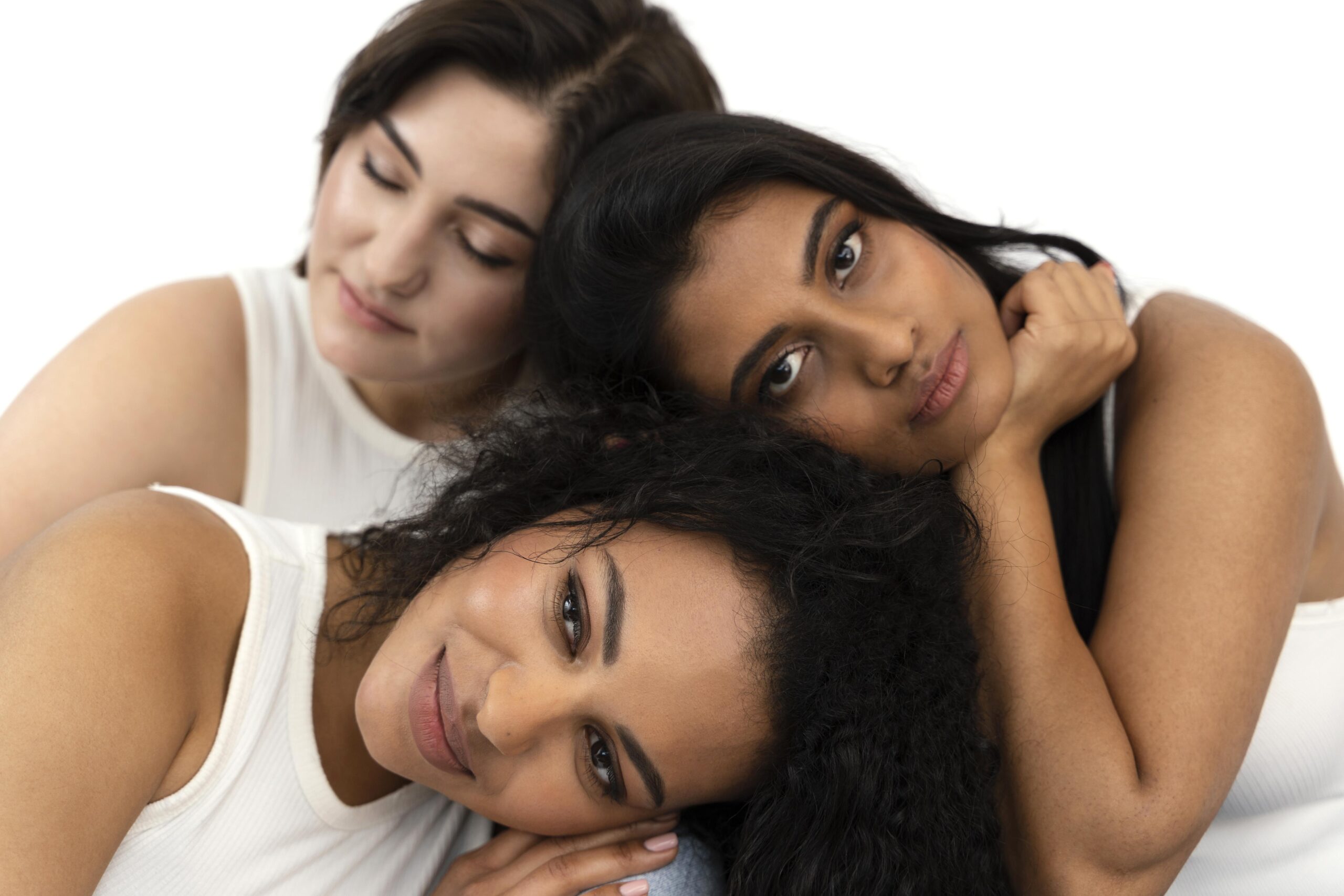
People can genuinely like different things because of culture, environment, personal experiences, emotional associations, psychology, biology, or simply… personality.
Some people truly do defy norms, feel attraction outside media-driven standards, and like something because it resonates, not because it’s trending.
That doesn’t make them superior though.
It makes them human.
Culture, Environment, and Attraction: Why Location Matters
What’s considered beautiful in one culture might be completely neutral (or even undesirable) in another.
Think about:
- Skin tone preferences
- Body proportions
- Facial features
- Hair texture
- Age perception
- Gender expression
Attraction is shaped by what you grew up seeing, not just what you’re biologically wired to like.
This is why global beauty standards feel so confusing, they try to flatten millions of cultural perspectives into one “ideal.”
Spoiler: it never works.
The Myth of “I Like Natural Women”
Now let’s address the elephant in the comments section.
To the men who say:
“I like natural women.”
That statement does not automatically mean that you’re evolved, different, or defying beauty norms.
Sometimes (not always, but often), what “natural” actually means is:
- Less expensive
- Less maintenance
- Less effort required from her
- Less time, money, or energy invested
And here’s the important part:
“Natural” and “real” are not the same thing.
A woman who chooses injectables, skincare treatments, hair treatments, cosmetic enhancements…is not “fake.”
She’s intentional.
And a woman who chooses none of those things isn’t “more authentic.”
She’s also intentional.
The problem isn’t preference.
The problem is pretending preference is moral superiority.
Science Enters the Chat: What Attraction Actually Is
Psychologically speaking, attraction is a mix of:
- Familiarity
- Repetition
- Emotional association
- Cultural conditioning
- Hormonal response
- Personal memory
That’s why:
- Exposure increases attraction
- Trends start to “look good” over time
- Things we once disliked can grow on us
Your brain loves patterns.
And beauty standards are just patterns on repeat.
So… Is Beauty in the Eye of the Beholder or Not?
The honest answer?
Yes. And no.
Beauty is:
- Taught, through media and culture
- Shaped, by environment and repetition
- Filtered, through personal psychology
- Chosen, when we become aware enough to question it
You can like what you genuinely like and acknowledge that you didn’t form that preference in a vacuum.
Both things can be true at the same time.
The Most Important Takeaway (Especially for Women)
You are allowed to:
- Follow beauty trends
- Reject them
- Enhance
- Maintain
- Experiment
- Stay natural
- Change your mind
- Do nothing at all
Not because of:
- A trend
- A partner
- A comment section
- A social expectation
But because choice is the real power move.
Beauty stops being a prison the moment it becomes a decision.
Final Thought
Beauty standards will keep changing.
Algorithms will keep pushing.
Someone new will always do something “different” — and the cycle will restart.
The real question isn’t:
“Is beauty objective or subjective?”
It’s:
“Am I choosing this, or was it chosen for me?”
And once you start asking that?
Congratulations.
You’re already seeing beauty a little more clearly.